Are You Operating a Commercial Property with Compromised Electrical Infrastructure?
The question that should come before the budget line
Are you unknowingly operating a commercial property with a compromised electrical infrastructure that voids your insurance?
That is the uncomfortable starting point for any landlord responsible for commercial infrastructure. Rent reviews, service charge pressure, tenant fit-outs, access requests, and rising maintenance costs all compete for attention. Electrical testing often gets pushed into the “when convenient” column because the lights are still on and the distribution board looks tidy from the outside.
That visual calm can be misleading.

Delaying Electrical Installation Condition Report inspections is not just a paperwork issue. It is a safety decision, a legal exposure, and, in the wrong sequence of events, an insurance problem. Many commercial property insurance policies require recent EICR documentation, sometimes dated within the prior 12 months for claim validation, particularly where fire damage is involved. If the file is stale, the argument after an incident quickly moves away from the damaged equipment and toward maintenance evidence.
Key Takeaway: An EICR is not a certificate to keep in a folder. It is a time-sensitive record of the fixed installation’s condition at the point it was inspected.
Commercial landlords face an awkward balance: avoid needless disruption for tenants, but keep enough inspection evidence to show that the building has been actively managed. The safest position is rarely the cheapest-looking one on a spreadsheet.
The Hidden Degradation of Commercial Electrical Systems
Why “it looked fine last year” is weak evidence
Commercial electrical systems age differently from domestic installations. They carry longer operating hours, heavier continuous loads, more frequent switching, and more interference from plant, machinery, catering equipment, retail lighting, lifts, HVAC, and ev charging systems. A residential circuit may sit idle for much of the day. A commercial board in a busy unit can work hard before the first customer walks in and continue long after the shutters come down.
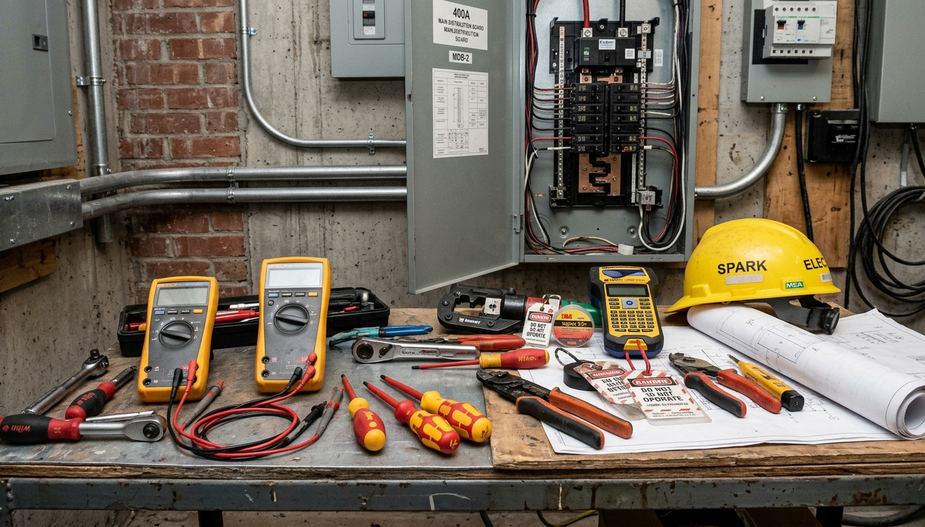
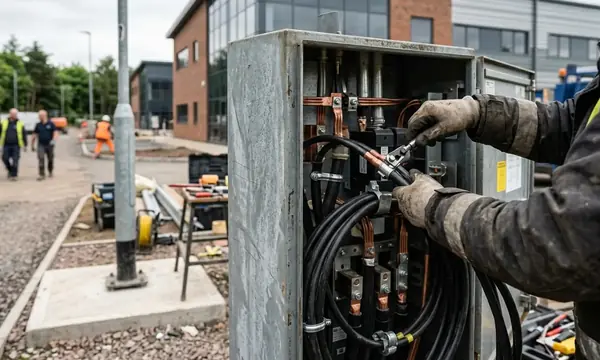
The degradation is physical, not theoretical. Thermal cycling in distribution boards can accelerate terminal loosening within roughly a year under long daily loads. Each heat-up and cool-down cycle applies a small movement to copper, brass, steel, insulation, and enclosure components. Nothing dramatic happens on day one. By month twelve, the installation may be carrying heat where it should not.
Micro-vibrations are another quiet offender. Adjacent industrial equipment can loosen connections after a couple of years, especially where boards share walls, floors, containment routes, or riser spaces with mechanical services. The terminal does not need to fall out to become dangerous. A slight loss of contact pressure can create local heating, arcing marks, nuisance tripping, and damaged insulation.
Field teams assessing commercial properties across Scotland on regional projects frequently encounter critical faults in systems that appeared visually sound only months earlier. The pattern is not always poor workmanship. Often it is a decent installation being asked to tolerate changing tenant loads, extended trading hours, and equipment that was never part of the original design intent.
Common signs that deserve more than a quick look
- Discolouration around protective devices, neutral bars, or cable entries.
- Repeated breaker operation that gets reset without an investigation.
- Warm enclosure surfaces during normal trading hours.
- New tenant equipment connected to old submains without load review.
- Moisture marks, corrosion, or tracking in risers and plant rooms.
Coastal humidity adds another layer. Properties near the coast often see insulation breakdown accelerate beyond inland patterns, particularly where salt-laden air reaches plant rooms, loading bays, or external intake equipment. Data centres with redundant feeds also behave differently from standard offices; their fault progression is shaped by load balancing, backup paths, and tighter environmental controls.
The True Cost of Delayed EICR Testing
Liability does not wait for the inspection date
The expensive EICR is usually the one commissioned too late.
When landlords stretch testing schedules to the outer limit, they take on several risks at once. A fault may be present but unrecorded. A tenant may assume the fixed installation is safe because the landlord has not raised an issue. An insurer may ask for maintenance records after a fire. A solicitor may examine the timeline and ask why warning signs were not followed by inspection.
Under the Electricity at Work Regulations, the duty of care for the fixed electrical installation rests with the landlord regardless of lease terms. A lease can allocate access arrangements, contribution mechanisms, or repair responsibilities, but it does not make the landlord’s statutory exposure disappear.
Warning: A tenant’s fit-out certificate does not replace the landlord’s evidence for the base building electrical installation.
The insurance position can be just as unforgiving. Many policies contain strict maintenance clauses. If an EICR is outdated when a fire occurs, the claim can be challenged before anyone debates the repair cost. That is why compliance & testing records need to be current, readable, and easy to retrieve. A dusty PDF in a former managing agent’s inbox is not a maintenance system.
Where landlords commonly lose control
- They treat the previous EICR date as the only trigger for action.
- They allow tenant alterations without updating the fixed installation record.
- They postpone access because one unit is difficult to schedule.
- They accept repeated temporary fixes instead of identifying the underlying fault.
- They fail to close out C1, C2, or FI observations with proper evidence.
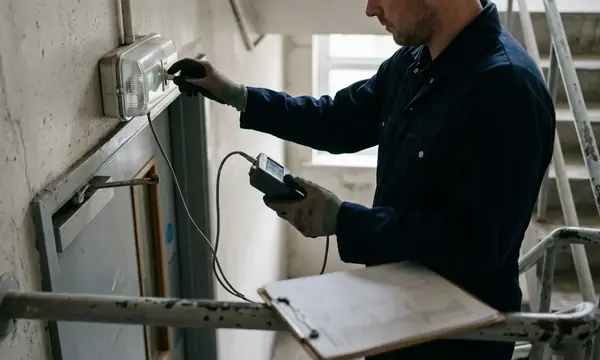
Troubleshooting delayed testing is less about panic and more about order. Find the last valid EICR. Confirm the scope. Check whether all distribution boards, risers, landlord supplies, external circuits, life safety interfaces, and communal areas were included. Then separate urgent remedial work from planned upgrades. The distinction matters, because a landlord who can show methodical control is in a stronger position than one who produces a single rushed report after a problem has already surfaced.
Pushing Back Against the Five-Year Maximum Myth
The interval is a ceiling, not a comfort blanket
The five-year interval is often misunderstood. It is treated in some property conversations as if it were a universal standard for every commercial site. It is not. It is a maximum commonly seen in guidance and inspection practice, not a guarantee that a specific installation remains safe for five years.
High-traffic retail sites tell a different story. Under long daily operation, these sites can develop insulation faults within roughly three years. The risk profile is shaped by trading hours, heat load, cleaning regimes, customer footfall, stock movement, refrigeration, signage, security systems, and tenant churn. A shop unit that changes occupier every few years may undergo repeated small electrical alterations, each one leaving another point to verify.
The better question is not “Can the landlord wait five years?” It is “What could change before the next inspection, and how would anyone know?”
Where annual inspection earns its place
- Retail parades with regular tenant turnover and frequent fit-out work.
- Industrial units with vibration from production equipment or mechanical plant.
- Hospitality sites with long operating hours and high kitchen loads.
- Mixed-use commercial buildings with shared risers and multiple distribution points.
- Sites adding ev charging systems, heat pumps, solar interfaces, or new HVAC loads.
There is one catch: annual testing is highly recommended for dynamic, high-load commercial spaces, but lower-risk static storage facilities may justify a different frequency through a formal risk assessment. In particular, static, climate-controlled storage facilities require that formal assessment to justify intervals beyond three years. That is a narrow judgement, not a loophole for busy buildings.
Pro Tip: Set the inspection interval from the building’s use, load profile, environment, and alteration history, not from a generic calendar habit.
This is where expert nuance matters. A lightly loaded archive store and a food production unit should not sit in the same testing category just because both are “commercial.” The label is too blunt. The installation’s actual stress pattern should drive the programme.
Implementing a Proactive Annual Inspection Strategy
A practical framework that tenants can live with
Annual inspection does not have to mean an annual full-building shutdown. That approach often looks tidy in a planner and messy on site. Full-building shutdown testing was trialled and then dropped after repeated tenant access conflicts. The replacement was a segmented model: divide the installation into five equal sections and test one section every 12 months.
That 20% annual rotation gives landlords continuous oversight without forcing the entire property into disruption at once. It also spreads remedial work. Instead of waiting for a large report full of accumulated defects, the landlord receives a controlled flow of findings and can budget repairs in a more predictable way.
How to set up the rotation
- Map the installation by distribution board, riser, landlord supply, external circuit, and tenant interface.
- Divide the installation into five logical sections of similar inspection effort.
- Assign one section to each 12-month inspection window.
- Keep a master register showing which areas were tested, when, by whom, and what remains due.
- Escalate any C1, C2, or FI observation outside the normal rotation if safety requires it.
- Review the schedule after tenant changes, load increases, major repairs, or new equipment installations.
The rotation should not become a hiding place for known defects. If a thermal issue appears in one board, adjacent boards with similar age, load, or environment deserve attention. A rigid schedule is useful until the evidence tells you to break it.
What to avoid when scheduling annual testing
- Booking inspections during peak trading periods because the diary is empty.
- Testing only easy-access areas while deferring awkward risers year after year.
- Failing to notify tenants of isolation windows and equipment sensitivity.
- Mixing landlord and tenant responsibilities without a clear scope note.
- Closing remedial actions without photographs, test results, or completion records.
A good annual strategy changes the financial model. Emergency repairs tend to arrive with premium call-out rates, tenant pressure, and limited choice. Planned remedials can be sequenced, quoted properly, and aligned with lease events or vacant periods. The work is still necessary, but it stops arriving as a surprise.
Securing Your Commercial Portfolio
From compliance cost to asset protection
The strongest landlords treat EICRs as asset intelligence. The report identifies where the building is ageing, where tenant use has changed, where protective devices no longer suit the load, and where the next capital spend is likely to land. That information belongs in the same conversation as roof condition, fire systems, drainage, and structural fabric.
For a single unit, annual inspection protects the tenant relationship and reduces unpleasant discoveries. Across a portfolio, it creates a consistent method. Sites can be compared by risk, not noise. Regional projects can be grouped. Remedial budgets can follow evidence rather than the loudest complaint.
The shift is straightforward: stop asking whether an EICR is due at the last possible moment, and start asking what condition evidence the landlord would rely on if something failed tonight.
If a fire investigation asked for the last valid EICR tomorrow morning, which report would you hand over?