
UK electrical compliance in 2024 feels less like a paperwork exercise and more like load management under pressure. Commercial buildings are taking on renewables, battery-backed systems, heat pumps, and EV charging while many distribution boards still reflect an older operating model.
I read the 2024 position as a shift in emphasis: less tolerance for hidden risk, more attention to how installations behave under changing load, and a sharper expectation that facility managers know where the weak points are before an incident or inspection finds them.
Changing UK Electrical Compliance
Why legacy assumptions are being tested
The old pattern was simple enough: fixed demand, predictable circuits, periodic inspection, remedial work when the report forced the issue. That model now creaks in commercial buildings with solar PV, battery storage, EV bays, and heavier mechanical loads.
Load variability from renewables was already showing up across commercial sites before the latest updates. It is not just a design calculation problem. It changes how boards run in the afternoon, how protective devices behave during mixed import and export conditions, and how maintenance teams interpret nuisance trips.
Quarterly reviews during 2024 are a sensible baseline for complex sites. Annual review cycles leave too much time between installation changes and compliance checks, especially where tenants add equipment, EV demand rises, or plant rooms get reconfigured.
The compliance mindset that works in 2024
The practical move is from reactive maintenance to active compliance records. I do not mean a glossy folder. I mean a live register of high-load areas, inspection dates, remedial priorities, EV charging capacity, earthing arrangements, and evidence of decision-making.
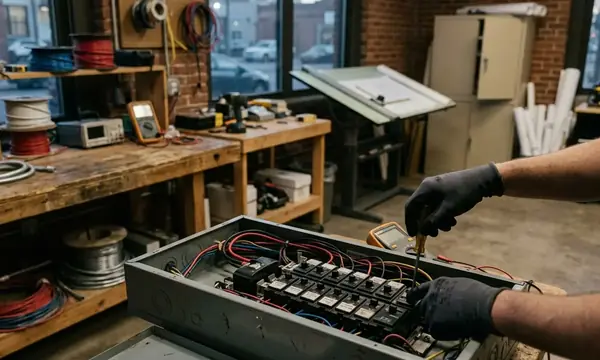
- Identify circuits serving server rooms, commercial kitchens, workshops, EV chargers, and plant rooms.
- Record where renewable generation or storage can alter expected load profiles.
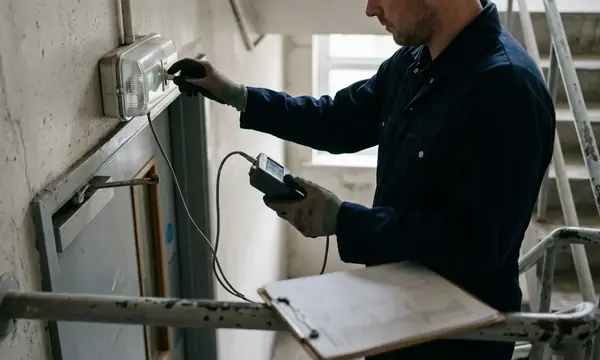
- Check whether inspection intervals still match the current use of the building.
- Track remedial actions from EICRs until closure, not just until quotation.
Key Takeaway: In 2024, the strongest facility records are the ones that connect electrical condition, building use, and planned upgrades in one place.
The legal duty has not disappeared behind technical updates. The Electricity at Work Regulations 1989 still sit behind the practical question every manager should ask: can I show the installation is being maintained to prevent danger?
Key 2024 Amendments to Commercial Safety Standards
AFDDs move from nice-to-have to harder expectation
The headline amendment for many commercial sites is the stricter use of Arc Fault Detection Devices in higher-risk settings. AFDD mandates applied to buildings with multi-occupancy during 2024, and that matters for mixed-use blocks, managed offices, education facilities, healthcare premises, and buildings with sleeping or vulnerable occupants.
AFDDs are not magic boxes. They reduce a particular category of fire risk where arc faults may not be cleared by conventional protection alone. The comparison I make on site is blunt: RCDs, MCBs, and AFDDs each watch for different failure behaviours. Treating one as a substitute for all three is poor engineering.
PEI guidance changes the conversation
Updated guidance for Prosumer Electrical Installations matters because more facilities now both consume and produce electricity. A commercial roof with PV and battery storage is not a passive load anymore. It can change direction, export under certain conditions, and interact with protective arrangements in ways that older documentation may not describe cleanly.

The better records show operating modes. They state what happens during grid import, export, islanding restrictions where relevant, maintenance isolation, and emergency shutdown. If those states are missing, the inspection becomes guesswork.
EICR coding has less patience for outdated switchgear
2024 EICR coding updates reduced the tolerance for outdated switchgear, especially where fault ratings, protective coordination, or condition do not match current risk. This is where some managers get caught. A board that has worked for years can still be a compliance problem if the load and risk around it has changed.
- Ask the competent person to separate condition defects from capacity and suitability concerns.
- Review whether C2 or C3 observations cluster around the same distribution board.
- Check whether old switchgear serves newly intensified areas such as EV charging or IT rooms.
- Prioritise remedials where fire risk, continuity risk, and access limitations overlap.
Warning: Do not treat a satisfactory EICR as permission to ignore known operational changes made after the inspection date.
During practice, group sessions showed that the fastest confusion usually comes from coding language, not from the physical defect. A clear remedial schedule beats a thick report left unread in a compliance folder.
EV Charging Infrastructure and New Regulatory Demands
Dynamic load management is now central for larger hubs
EV charging has become the pressure test for commercial electrical infrastructure. A few workplace chargers can be straightforward. A high-capacity hub is different.
Dynamic load systems are required for hubs above 100 kW capacity under the relevant guidance. That threshold matters because unmanaged charging can pull demand into territory the building was never meant to carry continuously. The risk is not only grid overloading. It is heat, discrimination, nuisance tripping, and rushed upgrades that do not match the actual operating profile.
Static design margins look tidy on paper. Dynamic systems respond to what the building is doing at the time. For facilities with variable plant demand, lifts, server load, refrigeration, or PV contribution, that difference is material.
Earthing and bonding need site-specific scrutiny
Enhanced earthing and bonding requirements are now a bigger part of multi-point EVSE compliance. Earthing checks at 12-month intervals for multi-point EVSE are a sensible discipline, particularly where chargers are exposed, shared, or used heavily by visitors and fleet vehicles.
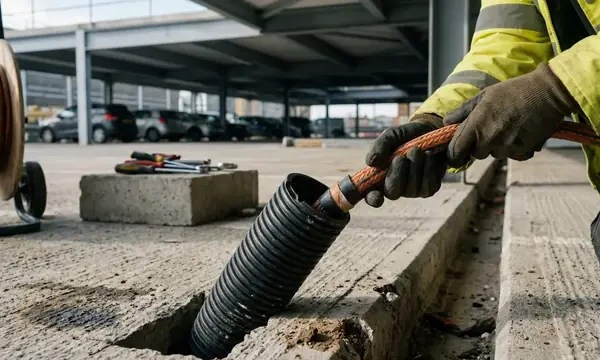
One recurring edge case is variations in EVSE bonding requirements across different utility providers. The national standard gives the framework, but network conditions and connection requirements can affect the final design. That is why I prefer early confirmation from the relevant parties before civils work starts.
- Confirm the earthing arrangement before specifying charger protection.
- Check bonding continuity after installation, not only at commissioning.
- Keep charger inspection records separate enough to review quickly.
- Revisit load assumptions when fleet patterns change.
Pro Tip: Put EVSE earthing checks on the same compliance calendar as EICR remedial reviews, but do not assume the same interval or scope applies.
Inspection schedules for charging hubs
Mandatory periodic inspection schedules tailored for high-capacity commercial charging hubs should be treated as operational controls, not administrative chores. Chargers get damaged. Cables are pulled hard. Enclosures weather. Protective settings may be changed during maintenance. These are ordinary site realities, and they deserve ordinary discipline.
For hubs above 100 kW, I would want inspection evidence that covers the distribution path, not just the charger pedestal. The upstream board, cable routes, protective devices, earthing, isolation, signage, and access arrangements all affect safety.
Scope and Regional Limitations of the 2024 Guidelines
BS 7671 is the starting point, not the whole map
BS 7671 provides the national framework, but commercial compliance rarely stops at one document. Lease obligations, insurer requirements, local authority conditions, fire risk assessments, and connection agreements can all add practical constraints.
This is where national consistency and local enforcement diverge. The installation may look technically sound under the national wiring framework yet still need extra evidence for a warrant, insurer, or landlord approval process.
Scottish warrants deserve separate review
Scottish warrants should be reviewed separately from the BS 7671 framework. Scottish Building Standards may require additional earthing verification not covered nationally, and overlooking local Scottish warrants leading to permit delays is a preventable problem.
The timing matters. If the warrant question is raised after procurement, the project team may already have fixed the design, ordered equipment, or booked shutdowns. That is an expensive point to discover a regional constraint.

- Check Scottish Building Standards requirements before tender issue.
- Ask whether the local authority expects additional evidence for earthing or bonding.
- Document warrant assumptions in the design risk register.
- Keep regional approvals visible to the facility team, not buried in project correspondence.
Insurance requirements can be stricter
Compliance with national standards does not automatically satisfy specialist insurance policy requirements. This is common in buildings with high-value stock, data rooms, manufacturing plant, public access, or charging infrastructure.
The clean approach is to compare three documents side by side: the latest EICR, the relevant standard or guidance, and the insurance engineering conditions. Where they conflict, ask for written clarification. Do not let the maintenance contractor, insurer, and landlord each assume someone else has closed the loop.
Warning: A technically compliant installation can still leave a facility exposed if the policy wording asks for tighter inspection evidence or specific remedial timescales.
Implementation Strategy for Facility Managers
Start with a targeted gap analysis
A comprehensive gap analysis should compare current infrastructure against the 2024 requirements, but it should not become a sprawling audit that nobody acts on. For most sites, the useful version is completed within around 4-8 weeks per site and focuses on the assets most likely to create risk or delay.
Start with distribution boards, high-load zones, EVSE, renewable interfaces, switchgear age, historic EICR codes, and outstanding remedials. Then rank the issues by safety impact, operational disruption, and dependency. A board upgrade that needs a shutdown may need more planning than a simpler protective device change, even if both are important.
Prioritise EICRs where load is concentrated
EICRs should be prioritised for high-load zones during 2024. Server rooms, EV charging stations, plant rooms, commercial kitchens, workshops, and areas with tenant-installed equipment should move to the front of the queue.
The reason is practical. These areas combine load, heat, continuity pressure, and often poor access. If a defect appears there, remedial work is harder to schedule and more likely to affect operations.
- Map high-load areas against existing EICR coverage.
- Confirm whether any circuits have changed use since the last inspection.
- Check whether old switchgear serves intensified loads.
- Agree shutdown windows before issuing remedial orders.
- Track completion evidence, including test results and updated schedules.
Phase board upgrades with the building still alive
The most tempting plan is the grand board replacement: one programme, one contractor, one big push. I have seen that look elegant in a meeting room and awkward in a live commercial building.
Initial simultaneous board upgrade plans are often adjusted after early assessments show phased rollout better suited to server room constraints. That is not indecision. It is what competent delivery looks like when uptime, access, cooling, and testing windows all matter.
Budgeting should therefore allow phased upgrades to distribution boards to meet new fault-rating and AFDD requirements. Put the boards serving the highest-risk or most constrained areas first. Leave cosmetic orderliness for later.
- Phase by risk, not by floor plan neatness.
- Separate emergency remedials from planned improvement works.
- Protect server rooms and critical plant from avoidable outage risk.
- Keep AFDD requirements visible in the upgrade specification.
- Review the programme after each phase, because site evidence changes decisions.
I treat the 2024 guidance as a sharper lens, not a substitute for competent design judgement on a specific installation. Facility managers who keep their evidence current, challenge old assumptions, and plan upgrades around real load behaviour will be in a stronger position when inspectors, insurers, or directors start asking harder questions.
Key Takeaway: The practical route through 2024 compliance is targeted review, documented prioritisation, and phased remedial work where electrical risk and business disruption meet.