The Grid Under Pressure: Glasgow's Commercial Evolution
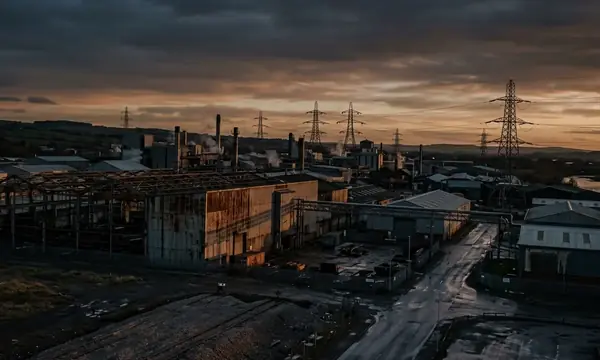
The rapid expansion of Glasgow's International Financial Services District and adjoining commercial zones has outpaced the assumptions built into much of the city's legacy electrical grid. New commercial infrastructure now carries loads that mid-20th-century distribution systems were never designed to serve continuously.
High-density computing is only part of the pressure. Advanced HVAC plant, electrically intensive tenant fit-outs and on-plot EV charging systems can all reach peak demand at roughly the same time. A building may have modern equipment throughout and still be constrained by an ageing connection upstream.
How the seven project types were selected
The review window covers reinforcement and connection works active or consented from early 2022 through late 2024. I set the scope by overlaying recent commercial planning consents against known primary-substation catchments, retaining corridors where consented floorplates clearly exceeded legacy design assumptions. The review maps connection pressure, not every live street works programme.
That process produced seven practical categories: substation overhauls, underground feeder installations, commercial fleet charging hubs, multi-tenant workplace charging, solar PV integration, battery storage and legacy-building retrofits. Together, they show where Glasgow's commercial power system is changing and where property-level constraints remain.
Key Takeaway: Grid reinforcement and internal building modernisation must be treated as one programme. Completing only one side leaves usable capacity stranded.
Projects 1 & 2: High-Capacity Grid Reinforcements in the City Centre
City-centre reinforcement starts with the assets that distribute power across several developments, not with the final tenant sockets. Packages are commonly prioritised where multiple multi-storey office consents sit inside the same 11 kV substation footprint.
Project 1: Substation overhauls
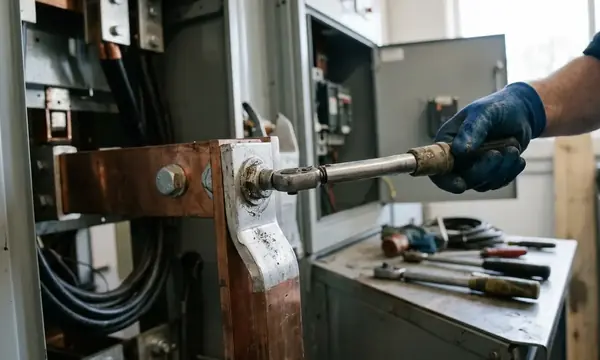
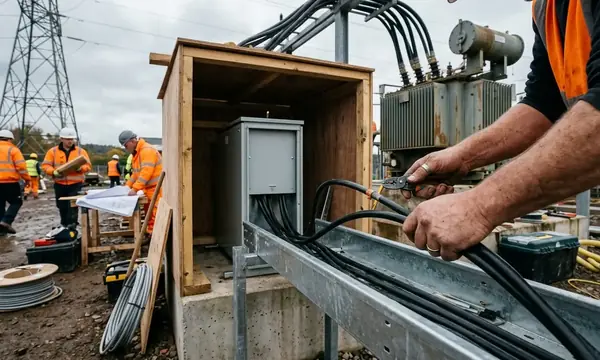
In dense commercial corridors, acquiring land for a new substation is rarely the practical route. The typical approach is to replace ageing 11 kV switchgear and increase transformer capacity within the existing building envelope.
This calls for careful staging. Existing customers still depend on the substation while the new equipment is installed, tested and brought into service. Reinforcement also needs to land before tenant fit-out reaches the point where delays begin affecting lease dates.
Project 2: Heavy-duty underground feeders
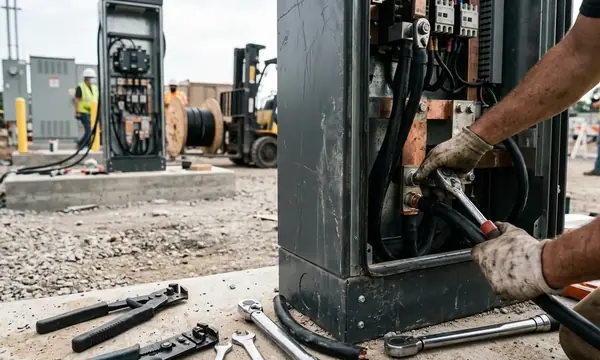
New transformer capacity achieves little if constrained cables remain between the substation and the demand area. Heavy-duty underground feeder runs reduce those transmission bottlenecks, but the street works are often the harder part of the job.
In historic streets, deep-trench segments through sandstone and congested utilities commonly take 14–20 weeks per city block once plant and spoil logistics are fixed. Work on accessible routes may run in night windows from 22:00 to 05:30 under temporary traffic orders, allowing commercial frontages to remain open during the day.
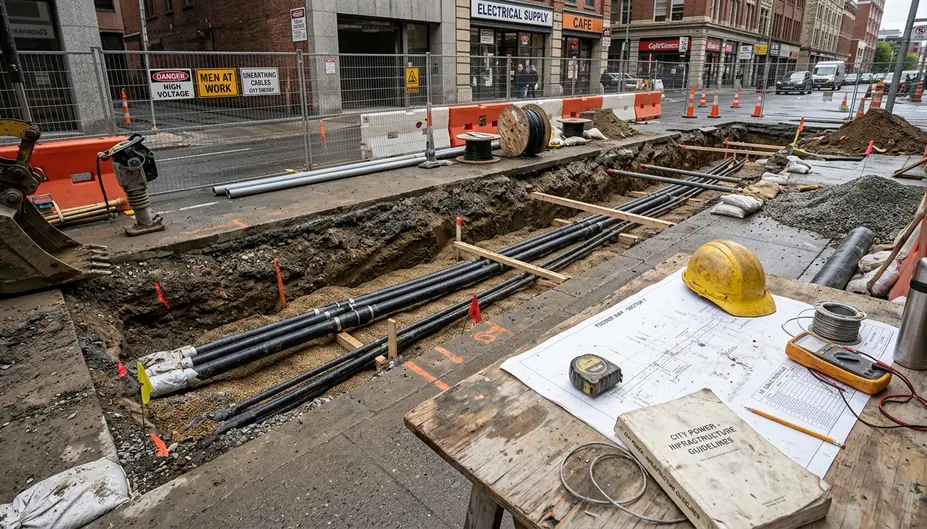
Narrow wynds change that method. A night programme that works on a broad avenue can become unworkable where excavators, temporary works and spoil vehicles cannot be staged together. Multi-day daytime closures may then be necessary rather than optional.
Warning: Do not build a property programme around headline trench durations alone. Access geometry and utility congestion can govern the sequence long before cable installation begins.
Projects 3 & 4: Commercial EV Charging Hub Integrations
Fleet charging hubs and workplace charging belong in separate project categories. They may connect to the same DNO network, but their diversity factors, operating patterns and upstream voltage requirements are materially different.
Project 3: DC rapid-charging hubs for fleets
Commercial fleet hubs commonly use 150–350 kW DC chargers supplied from dedicated 400 V or 11 kV connections with segregated metering. The dedicated supply matters because fleets tend to concentrate charging around operating schedules rather than spreading it evenly through the day.
Site planning should therefore begin with the intended vehicle turnaround pattern. Charger ratings alone do not define the connection requirement; the number of simultaneous sessions and their overlap with other site loads determine the real demand profile.
Project 4: Load-balanced charging for multi-tenant offices
Office schemes take a different route. Dynamic load-balancing controllers monitor building demand and throttle charging when consumption approaches the authorised supply capacity. This lets available headroom move between HVAC, tenant loads and EV circuits without relying on every charger drawing full power continuously.
A common failure occurs when load-balancing hardware is fitted without confirming the main incomer and authorised capacity. Building-wide trips can still occur when several rapid chargers coincide with an HVAC peak. The controller cannot compensate for an incorrectly defined electrical limit.
Commercial EV circuits must meet BS 7671 Section 722 requirements covering protective earthing, isolation points and residual-current devices before energisation. Compliance & testing should be built into the design sequence rather than left as a final-site activity.
Pro Tip: Record the authorised supply capacity as the controller limit only after checking it against the connection agreement and the actual main-incomer arrangement.
Projects 5 & 6: Smart Grid and Renewable Energy Tie-Ins
Large industrial and retail parks on Glasgow's outskirts have one advantage over constrained city-centre plots: usable roof and yard area. That space makes commercial solar PV and battery storage physically credible at a scale that can change the site's grid demand.
Project 5: Solar PV for daytime base load
Rooftop and car-port arrays are generally sized to offset daytime base load rather than maintain sustained export. Retail ventilation, refrigeration, lighting and industrial plant provide a local use for generation while it is available.
This does not turn the property into an isolated power system. It changes the shape of the site's demand, reducing the amount drawn from the municipal supply during productive daylight hours.
Project 6: Battery energy storage and peak shaving
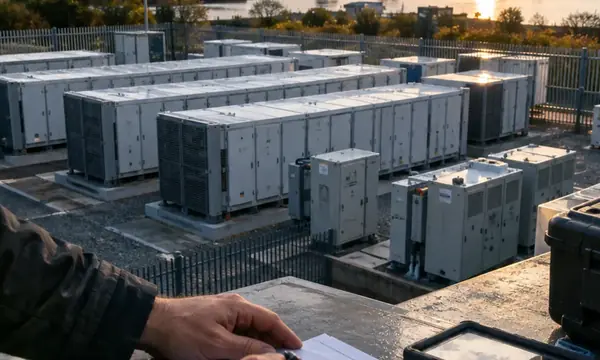
Commercial battery energy storage systems in the roughly 500 kWh–2 MWh band are being specified to capture off-peak energy and reduce winter evening peaks. The battery discharges when site demand rises, keeping the grid import below the level it would otherwise reach.
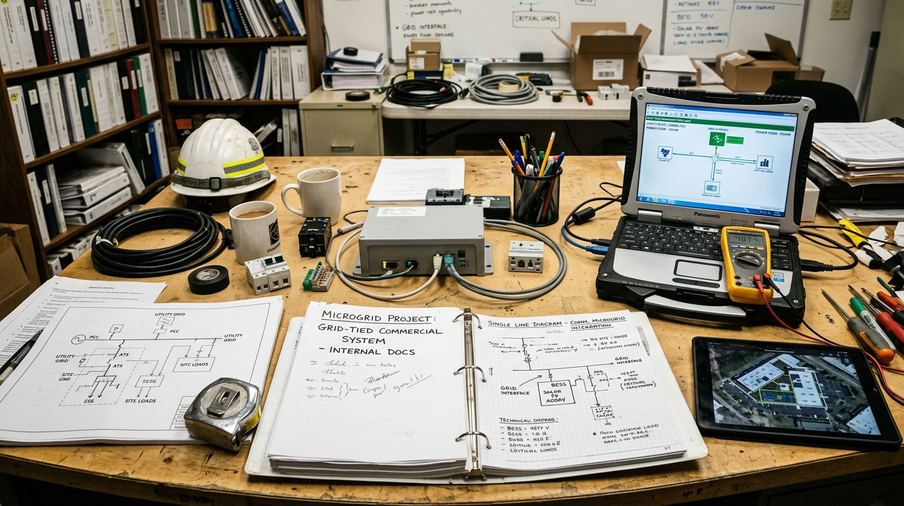
These local micro-grids remain grid-tied. Islanded operation is limited to short-duration backup under protection settings agreed with the DNO. That distinction affects switchgear, controls and operating procedures: a peak-shaving asset cannot simply be assumed to provide unrestricted building backup.
Facility teams should also coordinate electrical design with applicable energy efficiency standards for commercial properties. Reducing avoidable demand before sizing generation or storage usually produces a cleaner load profile.
Project 7: Legacy Building Electrical Retrofits
Glasgow's Victorian and early-20th-century commercial stock presents a different constraint. Sandstone façades, shallow floor voids and protected interiors can dictate the electrical route even where the required load increase appears straightforward.
Replacing distribution equipment without damaging the fabric
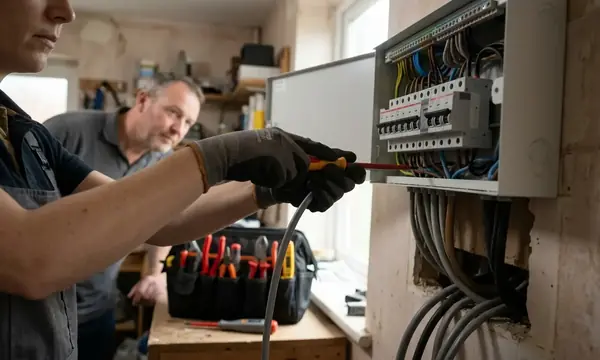
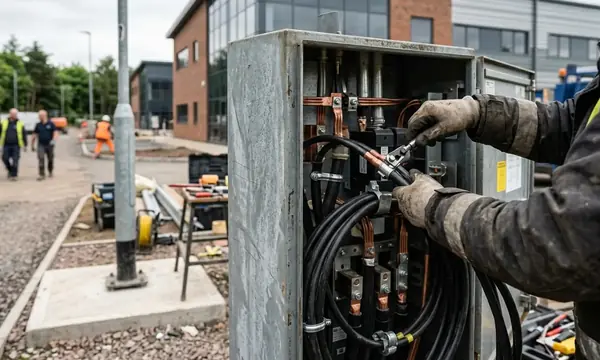
A typical package replaces cast-iron or early composite distribution boards with modern Type B boards. New containment is routed through existing service voids wherever possible, leaving sandstone elevations untouched.
Switchgear and riser changeovers are commonly staged floor by floor over six to 12 weeks. Tenants in unaffected zones can continue operating while each section is isolated, changed and returned to service. The programme depends on accurate circuit identification; undocumented cross-connections can undermine an otherwise sensible floor sequence.
Moving from fixed circuits to active controls
The retrofit is not just a board replacement. Lighting and heating circuits can be migrated onto addressable IoT controllers that feed circuit-level consumption into the building energy management system.
That visibility helps operators distinguish tenant demand from common services and spot when heating, lighting or ventilation remains active outside the intended schedule. In a legacy property, the monitoring layer often delivers as much operational value as the new distribution hardware.
Warning: Avoid cutting a convenient new route through historic fabric before surveying existing risers and service voids. The shortest cable path is not always the acceptable construction path.
Navigating the Upgrades: A Guide for Facility Managers
Facility managers need a power-capacity audit that produces the information a DNO will request. A generic condition survey is useful for maintenance, but it does not establish whether a proposed load increase can be connected.
A practical capacity-audit sequence
- Collect 12 months of half-hourly meter data. Keep the interval data intact so seasonal peaks and recurring operating patterns remain visible.
- Confirm the authorised supply capacity. Take this from the connection agreement rather than inferring it from the meter reading or protective-device label.
- Identify recorded maximum demand. Compare it with the authorised capacity to establish existing headroom.
- Build the proposed load schedule. Include HVAC changes, tenant fit-out, EV charging systems, electric heating, solar PV and battery operation where relevant.
- Test credible coincident peaks. Check when loads overlap instead of adding every nameplate rating without regard to operating time.
- Submit a formal DNO application where required. If projected load breaches authorised capacity, the DNO must assess the increase and any upstream reinforcement.
- Design internal distribution for the future capacity. Base switchgear, risers and containment on the future authorised connection, not today's meter reading.
Where upstream reinforcement is triggered, the assessment and connection-offer stages commonly take eight to 16 weeks. That period sits before procurement and construction, so it needs to appear in the property programme early.
Common coordination mistakes
- Ordering high-load plant before the connection position is known.
- Treating spare ways in a distribution board as proof of grid capacity.
- Using a single peak meter reading without reviewing the full seasonal profile.
- Upgrading the incomer while leaving downstream risers sized for the old load.
- Scheduling intrusive works twice within the same lease cycle.
Multi-let assets need extra care because landlord-controlled infrastructure and tenant fit-out cycles may not align. Phasing internal works into void periods can preserve occupancy while still preparing the main distribution route for the eventual higher capacity.
Key Takeaway: Give the DNO a load schedule, half-hourly demand record and confirmed connection details in the first application pack. That sequence reduces avoidable re-surveying.
The Strategic Imperative for Commercial Landlords
These seven project types matter because Glasgow's commercial growth depends on power being available when buildings are ready to use it. A modern façade and premium fit-out do not compensate for a constrained electrical connection.
Landlords who complete internal modernisation while city-side reinforcement is still under construction can take higher loads when upstream capacity is released. Those who wait may find that neighbouring developments have absorbed the remaining headroom, leaving later applications exposed to longer lead times and higher contestable-works costs.
Secure the upgraded grid connection now and modernise the internal distribution network against that future capacity before neighbouring developments consume the available headroom.