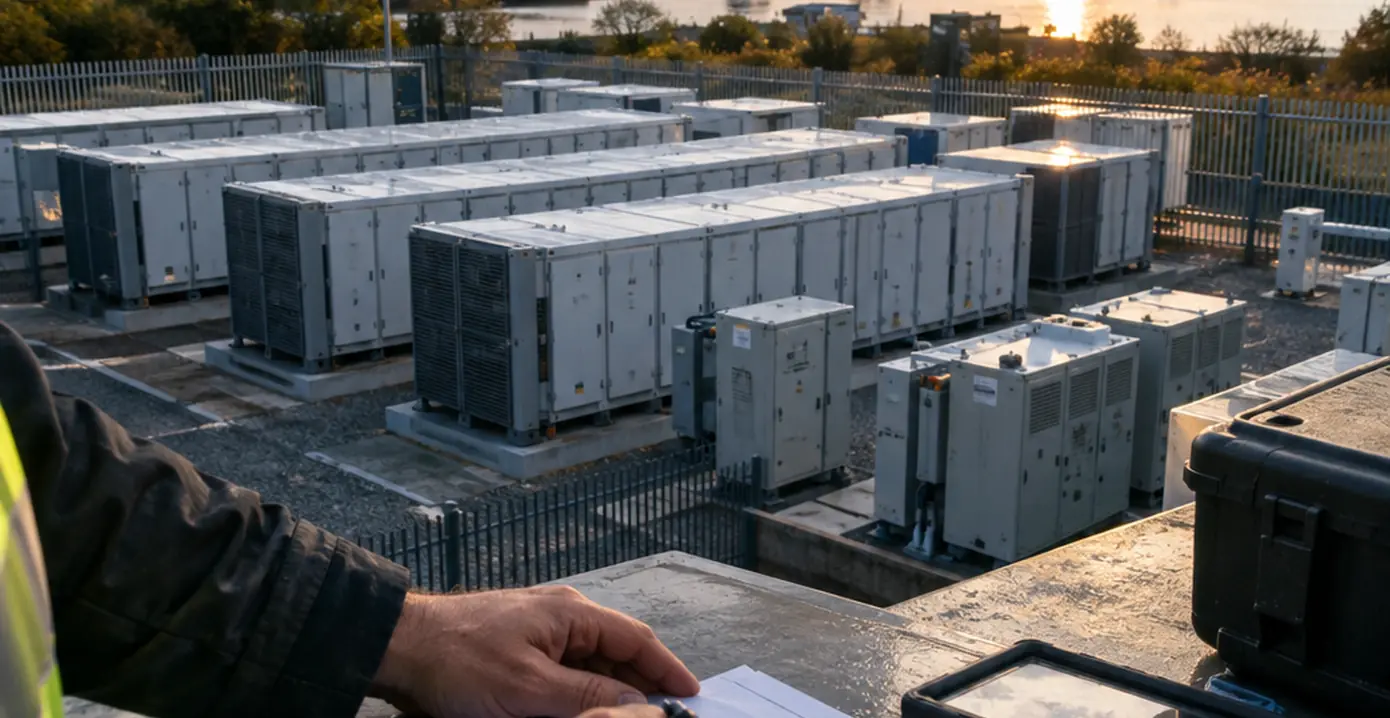
Behind-the-Meter Battery Storage and Central Belt Grid Constraints
A commercial Battery Energy Storage System (BESS) is an integrated assembly of lithium-ion or flow battery racks, bidirectional inverters and an Energy Management System (EMS). Installed behind the settlement meter, it stores and dispatches electrical energy on industrial and commercial premises. Its inverter rating determines charging and discharging power; its usable energy capacity determines how long that output can continue.
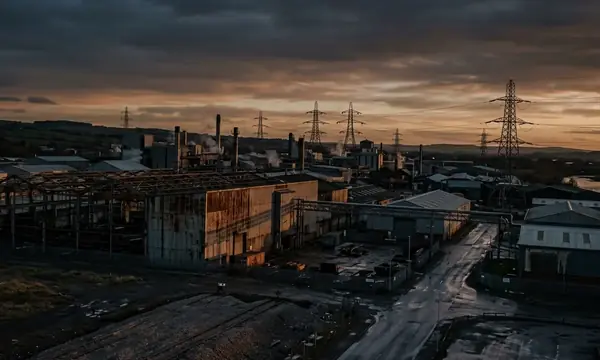
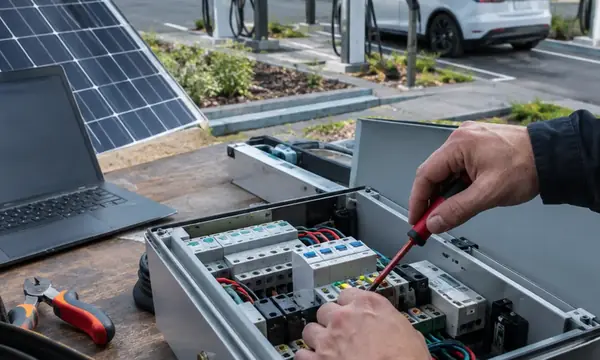
Across Glasgow, Falkirk and the wider Forth Valley, legacy substation capacity and heavy industrial loads can constrain additional solar PV and EV charging systems. Storage can reshape demand at the connection point, but charging the battery also uses available supply capacity.
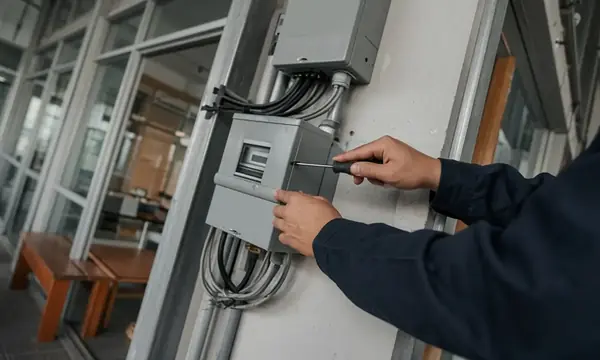
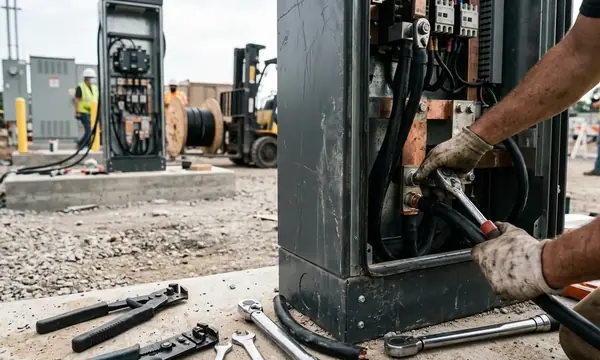
The useful starting point on a Central Scotland industrial estate is the intake and main distribution board. Checking transformer capacity, existing loading and switchgear constraints establishes whether the proposed battery can operate within the site's commercial infrastructure.
Size from the supply inward
- Read the transformer nameplate. Record its kVA rating and establish which existing loads it serves.
- Confirm Authorised Supply Capacity (ASC). Compare the agreed import capacity with the transformer rating. A larger transformer does not automatically permit a larger import.
- Examine the half-hourly profile. Use a full year of consumption to identify winter peaks, charging opportunities and periods when solar generation may create export.
- Test the dispatch schedule. Check battery charging, site demand and discharge against import and export limits.
Site-specific transformer headroom governs feasible sizing alongside ASC and the connection agreement. Transformer kVA and inverter kW require an engineering assessment rather than a direct like-for-like comparison. Where the records disagree, retain the more restrictive capacity assumption until the DNO confirms the available headroom.
Physical Footprint, Thermal Runaway Mitigation and Planning Consent
Mark the fire-appliance route, flood constraints and nearest noise-sensitive windows before selecting an enclosure. A spare corner can become unsuitable once access, ventilation discharge and maintenance clearance appear on the drawing.
Containerised BESS units need space beyond their enclosure footprint: doors must open, cable entries must remain accessible and the firefighter approach must stay clear. Modular outdoor cabinets can suit a constrained yard, provided their combined maintenance and fire-safety clearances fit. Near mixed-use boundaries, assess HVAC noise and discharge direction early.
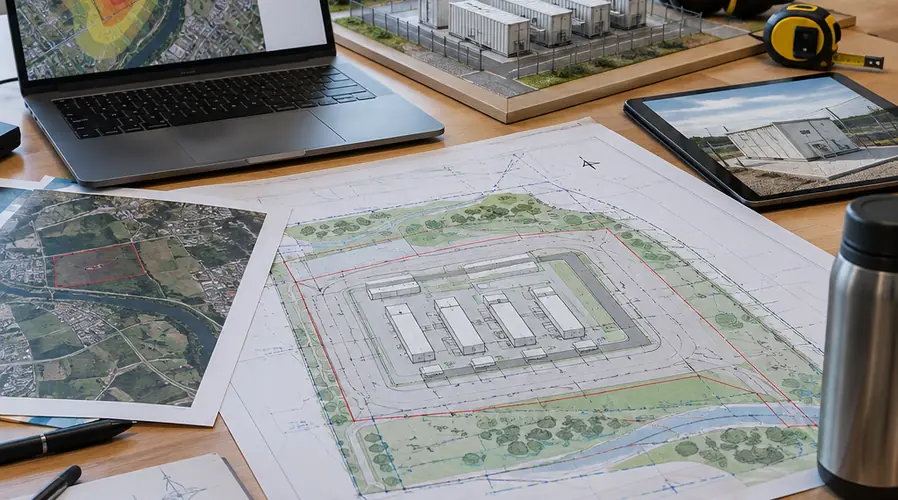
Keep vents and emergency access clear
For lithium-ion systems, the siting design must address thermal runaway and its consequences. Maintain separation from occupied buildings, keep manufacturer-specified deflagration vents clear of walls and stored materials, and preserve hard-standing access for Scottish Fire and Rescue. Confirm the spacing against current National Fire Chiefs Council (NFCC) guidance, equipment requirements and the site's fire-service consultation.
Separation Is Site-Specific
A layout accepted elsewhere does not establish acceptable separation, vent orientation or emergency access for a Glasgow or Falkirk yard.
Along the Clyde, Forth and Carron corridors, check the plot against SEPA flood information before fixing plinth levels. The design must address the relevant flood extent, equipment elevation and sealed cable ducts. Raising an enclosure alone leaves cable-entry routes unresolved.
Electrical contractors engineer containment, earthing and AC/DC isolation. Glasgow City Council or Falkirk Council determines the planning position and whether hazardous substances consent applies to the proposed inventory. Engage the planning authority and Scottish Fire and Rescue early; a completed electrical design does not establish either consent. The Health and Safety Executive guidance on grid-scale and commercial battery energy storage provides further safety context.
Engineering Recommendation G99 Applications and Flexibility Revenue Stacking
A behind-the-meter battery operating in parallel with the distribution network requires the appropriate connection process. In the SP Energy Networks licence area covering Central and Southern Scotland, prepare the application under Engineering Recommendation G99 around the proposed plant, operating modes and connection limits.
Submit evidence for the whole connection
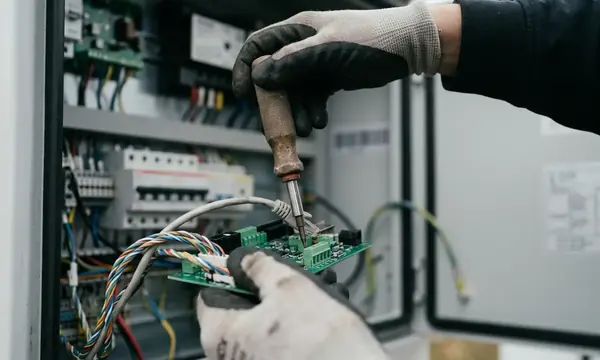
The application should declare inverter fault-current contribution and provide the required protection evidence. Establish whether a harmonic assessment under ENA G5 is needed, particularly where variable-speed drives or clustered EV chargers already share the supply. Agree the commissioning and witness-test scope for voltage, frequency and loss-of-mains protection.
Where unrestricted discharge could exceed agreed export capacity, specify a G100 export-limitation scheme. Configure the EMS so an aggregator's flexibility instruction cannot override that limit. Export limitation also leaves the import-capacity check necessary: battery charging can coincide with a site's highest demand.
Separate bill savings from market income
Build the commercial case from the site's half-hourly profile and applicable tariff. Peak shaving can reduce exposure to DUoS red-band charges where those charges apply; storing surplus solar PV can increase on-site consumption. Both uses compete for available battery capacity.
DNO local flexibility tenders and national balancing services can add revenue where eligibility, availability requirements and aggregator terms fit the operating schedule. Avoid counting the same stored energy against overlapping commitments. Market returns move with contract terms and settlement profiles, so test the investment case with and without those revenues.
Execution Sequence from Half-Hourly Load Profiling to Witness Testing
Use approval gates to keep an unresolved supply constraint from becoming a completed plinth. The same sequence supports regional projects across Glasgow and Falkirk, while each site's connection and planning conditions determine release dates.
- Phase 1: Close feasibility and the capacity audit. Analyse half-hourly consumption, verify ASC and inspect the intake, transformer and main low-voltage switchboard. Define the proposed inverter power, energy capacity and operating envelope.
- Phase 2: Submit G99 and accept the connection offer. Resolve protection, fault-level and harmonic queries. Confirm import and export conditions before committing to equipment whose rating depends on those conditions.
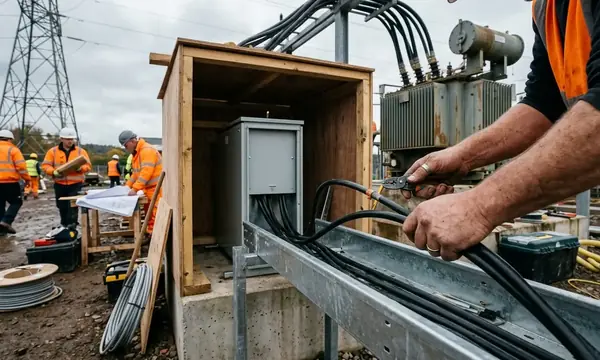
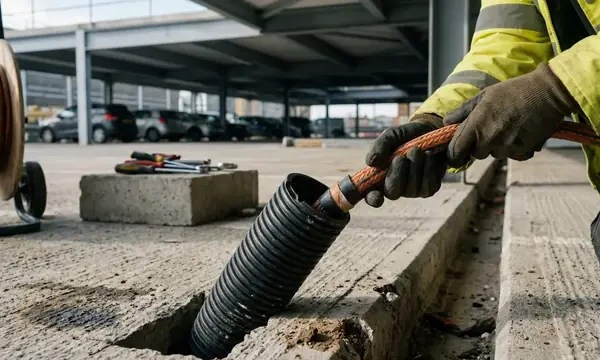
- Phase 3: Release civil and electrical installation. Once the offer is accepted and the planning position is resolved, construct the plinth, ducting and HV/LV cable containment. Preserve the agreed access, flood provisions and vent clearances throughout construction.
- Phase 4: Complete testing and energisation. Carry out commissioning, complete any required DNO witness testing and obtain the necessary acceptance before parallel operation.
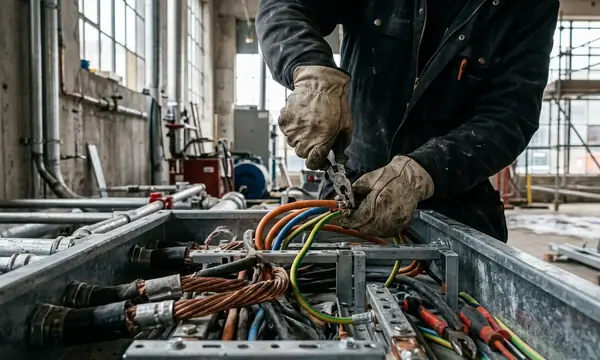
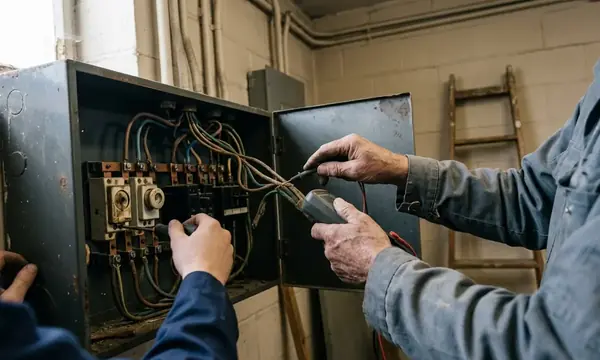
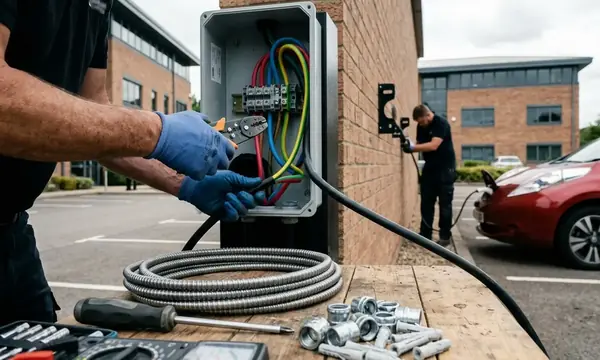
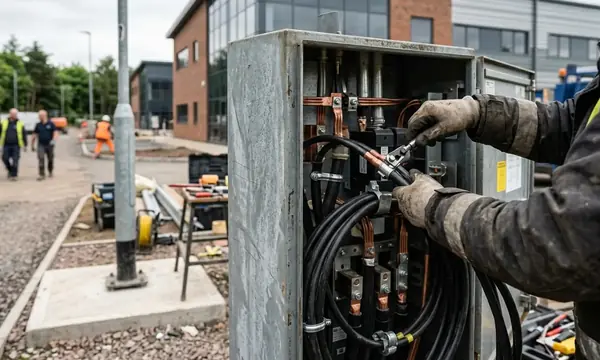
Before connecting into the existing main low-voltage switchboard, confirm protective-device coordination, isolation arrangements and the switchboard's suitability. Apply BS 7671 requirements to the installation and address arc-flash assessment and labelling within the site's safety arrangements. The compliance and testing handover should include protection settings, isolation information and verified EMS limits.
Request the last 12 months of half-hourly consumption data from the energy supplier and commission a formal Authorised Supply Capacity and load-profile audit before approaching the DNO.