Commercial landlords do not need to become electricians, but they do need to manage electrical risk with evidence, timing, and a clean paper trail.
In England, Wales, and Scotland, the practical duty is similar: keep the electrical installation safe for the people who use the premises. That includes tenants, staff, contractors, visitors, and anyone else who can reasonably be expected to encounter the system. Scotland has its own property and leasing practices, but the compliance logic is the same in day-to-day building management: know the condition of the fixed wiring, control the risk from portable equipment, and document what has been checked.
The two pillars are straightforward. An EICR deals with the fixed electrical infrastructure. PAT deals with plug-connected appliances and movable equipment. Problems start when landlords treat one certificate as a substitute for the other.
The cost of getting it wrong
Non-compliance rarely arrives as one neat problem. It usually appears as a chain: an overdue inspection, an undocumented repair, an appliance pulled from storage, then an incident that exposes the gap.
Insurance cover may be challenged if electrical inspection records are missing or out of date.
Lease disputes become harder to defend when responsibilities were not written down clearly.
Unsafe circuits or appliances can disrupt trading, warehousing, access, and tenant operations.
Enforcement action becomes more likely when records show neglect rather than managed risk.
Key Takeaway: Treat EICR and PAT as separate controls within the same compliance system. One proves the fixed installation was assessed. The other manages the appliances people actually touch.
Decoding the EICR: Fixed Infrastructure Safety
What an EICR is
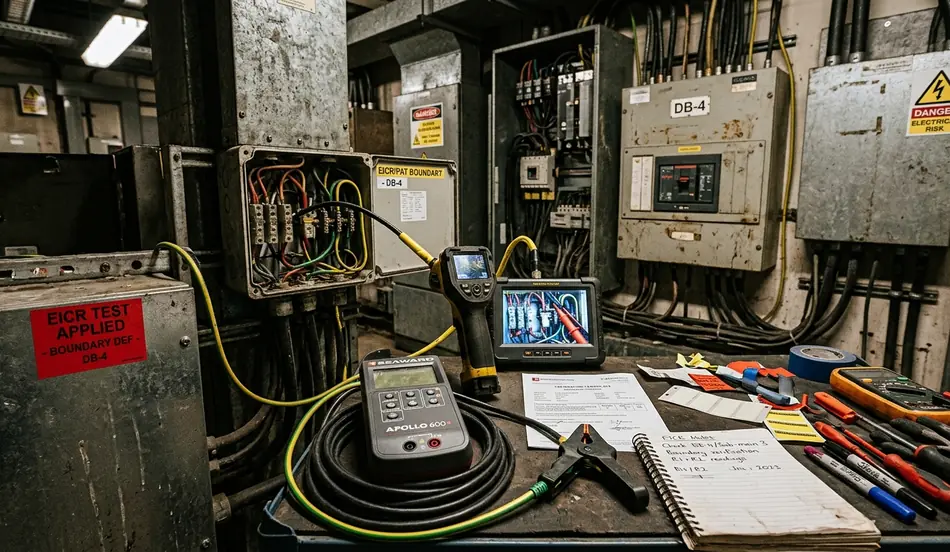
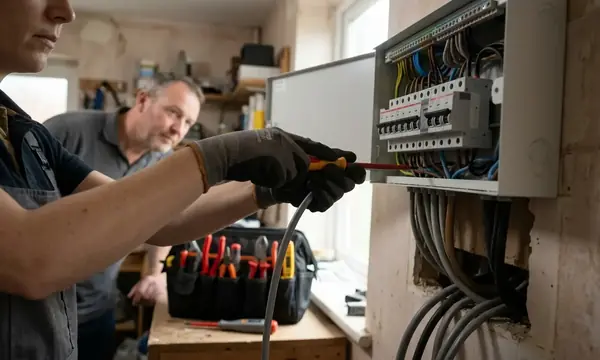
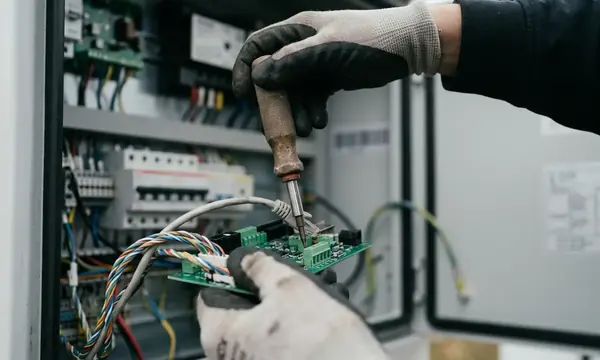
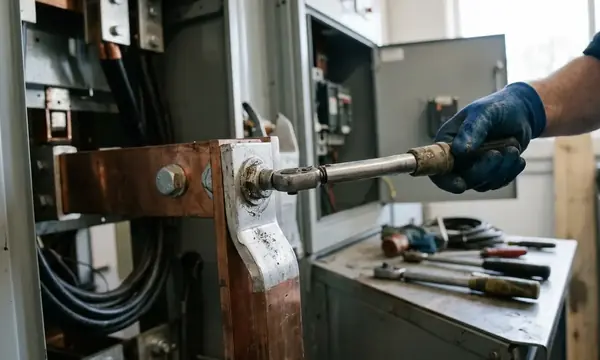
An Electrical Installation Condition Report is a formal inspection and test of the hardwired electrical installation. It covers distribution boards, circuits, protective devices, earthing, bonding, socket outlets, lighting circuits, and other fixed parts of the building electrical system.
I tend to describe it to landlords this way: the EICR tells you whether the building's electrical backbone is safe to keep using. It is not a cosmetic survey. Nor is it a quick look inside a cupboard. The report is a structured assessment against recognised safety expectations, with observations coded by severity.
What inspectors look for
Good EICR work is patient. The visible defect is often only the clue.
Overloaded circuits, especially where tenant changes have added equipment without a design review.
Defective DIY alterations, including poorly terminated accessories and undocumented circuit additions.
Wiring degradation, with particular attention to circuits installed around or before 1990.
Poor labelling that makes safe isolation difficult during maintenance.
The older the building, the more I watch for layered alterations. A warehouse may have had mezzanine lighting added, then extra charging points, then temporary heaters, then a tenant fit-out. Each change may look harmless on its own. Together, they can alter the load profile of the installation.
How often to schedule it
For commercial properties, EICR inspections are commonly scheduled between 48 and 60 months apart for fixed systems. A change of tenancy is also a sensible trigger, because the incoming use may be materially different from the outgoing one.
Pro Tip: Do not wait until the certificate is about to expire. Book the inspection while there is still time to price remedial work, arrange access, and brief tenants.
Understanding PAT: Portable Equipment Compliance
How PAT differs from fixed wire testing
Portable Appliance Testing focuses on equipment connected by a plug, flexible lead, or similar movable connection. It does not assess the condition of the building wiring behind the socket.
That boundary matters. A perfectly safe socket can still supply a damaged kettle. A fully tested laptop charger can still be plugged into a circuit with wider installation issues. The controls overlap in the workplace, but they do not replace each other.
What counts as a portable appliance
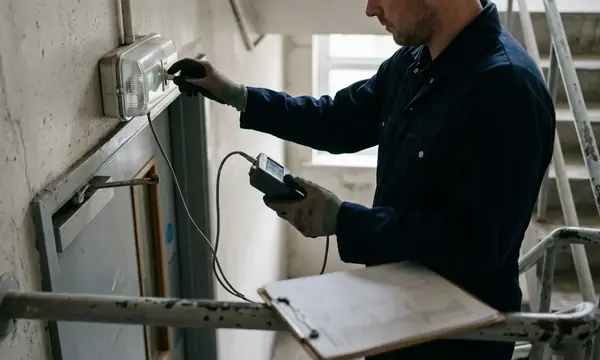
In commercial premises, portable does not always mean small. Office kettles, extension leads, monitors, cleaners' equipment, warehouse scanners, battery chargers, workshop tools, and heavy-duty power tools can all fall into the PAT regime when they are plug-connected or moved as part of normal use.
One common blind spot is storage. Overlooking portable tools in storage areas leads to undetected faults, especially when items are pulled out for seasonal work or contractor use. The appliance may have missed the last test simply because it was not on the floor when the tester walked the site.
Setting risk-based intervals
PAT intervals should reflect the equipment and the environment. Testing intervals range from 12 to 48 months depending on equipment mobility, handling, and exposure to damage.
Low-mobility office equipment usually carries lower physical risk.
Shared kitchen appliances see more handling and heat exposure.
Warehouse equipment faces knocks, dust, moisture, and frequent movement.
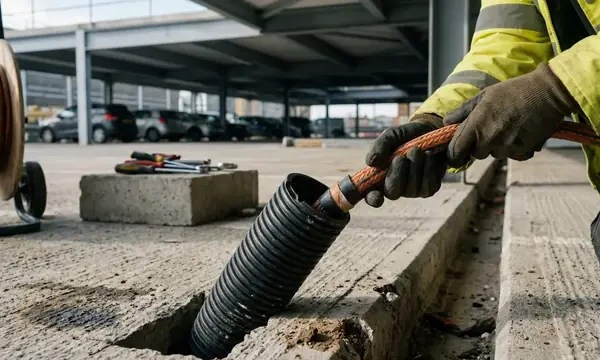
Construction site tools need tighter control because conditions change quickly.
EICR vs PAT: Mapping the Boundaries of Responsibility
Where one ends and the other begins
The cleanest boundary is the socket outlet. EICR covers the fixed installation up to and including the socket. PAT begins with the plug, lead, appliance casing, and the equipment connected to that socket.
This sounds simple until you walk a mixed-use building. A wall-mounted hand dryer may be hardwired, so it belongs with fixed installation assessment rather than PAT. A plug-in water heater may sit in the same room and fall under appliance testing. A fixed item in one unit may be plug-connected in another.
Common areas of confusion
Hand dryers, panel heaters, and water heaters can be fixed equipment if hardwired.
Extension leads and multi-way adaptors should not be ignored just because they are cheap.
Tenant-owned appliances still create site risk if used in the landlord's building.
Equipment supplied by contractors may need control before it is used on site.
The landlord's responsibility depends on lease wording, control of the area, and who supplies the equipment. Still, from a practical compliance view, unmanaged electrical risk does not care who bought the item.
Why both certificates matter
EICR and PAT certification gives a more complete view of site safety because it covers two different routes to harm: the installation and the appliance. One is infrastructure-led. The other is use-led.
Warning: Do not accept a PAT register as evidence that the building wiring is safe. It tells you nothing useful about protective devices, circuit condition, or fixed wiring degradation.
Bulk Testing Strategies for Warehouses and Sites
The access problem
Warehouses and active commercial sites expose weak planning quickly. Hundreds of appliances may be spread across racking areas, charging bays, offices, welfare spaces, loading docks, and locked stores.
On active sites, the hardest part is rarely the test itself. It is finding the equipment, matching it to the asset list, keeping operations moving, and preventing tested items from being mixed back in with untested stock.
How phased testing reduces disruption
On one high-volume programme, the initial plan focused on weekend-only access. Workflow mapping showed a better answer: phased weekday blocks during low-traffic shifts. That avoided overtime access issues and reduced the scramble to locate supervisors, keys, and equipment owners.
For large sites, high-volume runs are often completed in 3 to 5 day blocks when the work is grouped by zone and equipment type. The practical sequence is simple:
Confirm site zones, shift patterns, and restricted areas.
Freeze or clean up the appliance asset list before testing starts.
Test by location rather than chasing individual departments across the building.
Label failed items clearly and remove them from use.
Issue the register in a format the facilities team can maintain.
Where SDM Electrical fits the workflow
For SDM Electrical projects, the priority is to keep the site running while still producing usable compliance records. That means agreeing access windows, sequencing tests around tenant activity, and feeding failures back quickly enough for repair or replacement decisions.
Warehouse humidity levels alter testing intervals compared to standard offices. I would rather see that written into the testing plan than discovered after a run of damaged leads and corroded contacts.
Scope and Limitations of Electrical Certifications
An EICR is a dated assessment
An EICR is a snapshot valid from date of issue onward. It records the condition found at inspection, within the limits of accessible systems and agreed scope.
That last phrase matters. Inspectors cannot certify what they could not access, dismantle, or identify. Locked rooms, concealed wiring, tenant equipment, and live operational constraints can all limit what is seen.
PAT does not remove daily responsibility
PAT testing does not replace daily visual checks by on-site staff. Those checks remain mandatory regardless of certification date.
Look for split cable sheaths and crushed leads.
Remove scorched plugs and damaged extension leads from service.
Report missing labels where the appliance status is unclear.
Keep liquids, dust, and trailing leads under control.
In practice, the fastest safety wins often come from staff spotting obvious damage between formal visits. A test label is not a force field.
Specialist exclusions
Standard EICR and PAT work may not cover specialist industrial machinery that needs manufacturer-specific diagnostics. Production equipment, process control systems, and bespoke plant can sit outside normal appliance testing methods.
The right response is not to force unsuitable tests onto specialist machinery. Record the exclusion, identify the competent route for assessment, and keep that evidence with the main compliance file.
Creating Your Long-Term Compliance Schedule
Align renewals with leases
The best compliance schedules follow the commercial rhythm of the building. Lease-aligned renewals should be set at 60-month maximum intervals for fixed installation inspections, with earlier review when the tenant changes or the use of the space shifts.
This avoids the familiar handover problem: a new tenant arrives, fit-out starts, and nobody can confirm whether the existing electrical records reflect the space they are about to occupy.
Build one digital log
Keep EICR reports, remedial evidence, PAT registers, failed item actions, and retest dates in one central digital log. Do not leave the only copy in an inbox or with a departed facilities coordinator.
Record certificate issue dates and renewal dates.
Set automated reminders well before expiry.
Tag appliances by location, owner, and risk category.
Track failed items until repaired, replaced, or removed.
Review the log after tenant turnover, refurbishment, or layout change.
Make testing part of facilities management
Electrical compliance works best when it is boring. Put it into the same routine as fire checks, emergency lighting, water hygiene, and planned maintenance.
My preferred sequence is quarterly record review, annual asset clean-up, PAT planning by risk, and EICR scheduling around lease events. It keeps the work visible without turning every inspection into a crisis.
Key Takeaway: A landlord who can show current EICR records, a risk-based PAT register, and evidence of follow-up action is in a far stronger position than one relying on memory and old PDFs.