
Grangemouth’s Next Energy System Needs People Who Can Energise It
The Grangemouth–Falkirk industrial corridor carries generations of electrical knowledge. Refining, petrochemical processing and thermal plant built a working culture around continuous production: keep the process supplied, maintain the protection, control the isolation and understand what a lost feeder means downstream.
That inherited craft base matters to the energy transition. So does recognising how much its work must change.
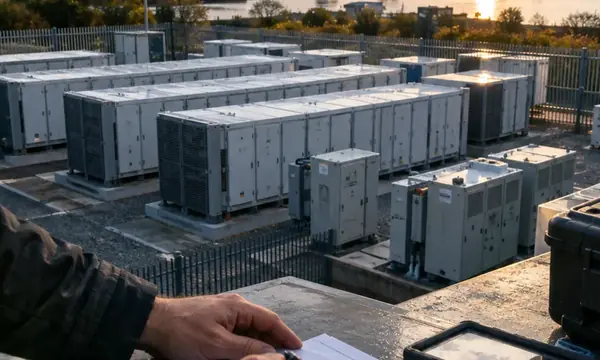
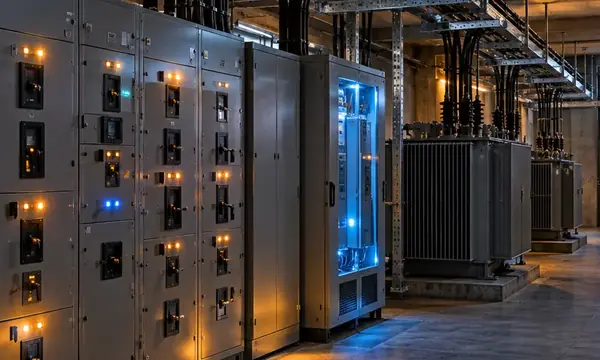
Replacing fossil-fuelled steam and process heat with electrified heavy loads changes the demands on distribution networks. Battery installations introduce different operating arrangements. New transformers, switchgear and protection schemes bring fresh commissioning duties, even where the equipment stands inside a familiar site boundary.
A technician who knows an existing process unit holds valuable knowledge about its loads, interlocks and operating habits. Authorisation for that unit still needs to be distinguished from assessed competence to switch a new primary or commission a battery installation. The transition must carry that knowledge forward while building the competence needed for the replacement plant.
Capital announcements tend to put equipment and construction dates in the foreground. Planning approvals establish another milestone. Neither supplies the people who will joint the cables, prove the protection and accept responsibility for energisation.
Consider the practical consequence: an industrial switchboard stands on its plinth, the civil works are complete and the energisation window arrives. Nobody locally authorised holds the switching instruction. The investment has reached the point where workforce planning determines whether anything can run.
Electrical skills therefore belong in the development programme from the outset. Leaving them until the installation contract turns a regional transition into a scramble for the same small pool of experienced people.
The Electrical Work Behind a Forth Valley Upgrade
Start with the tasks that release the plant for service. Job titles alone tell a facility manager surprisingly little about who can perform them.
- HV switching: interpreting the network arrangement, following site safety rules and carrying out the authorised switching sequence.
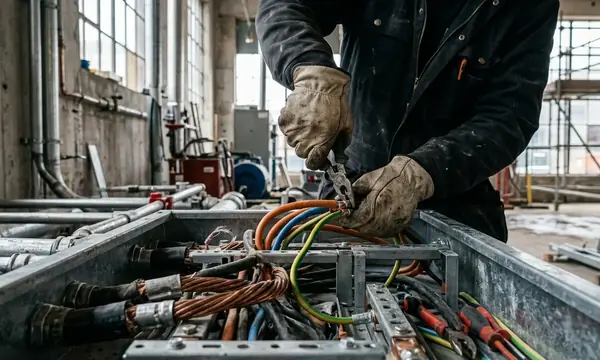
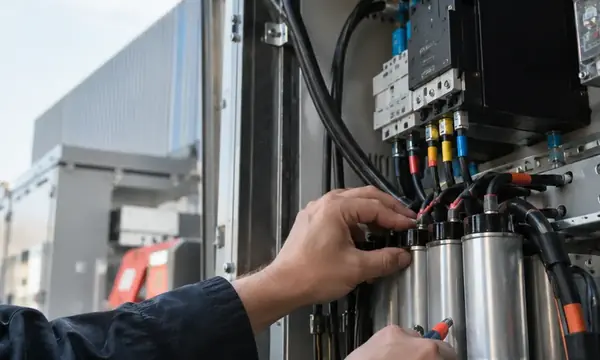
- Cable jointing: preparing and terminating the specified cable system with competence matched to its voltage and construction.
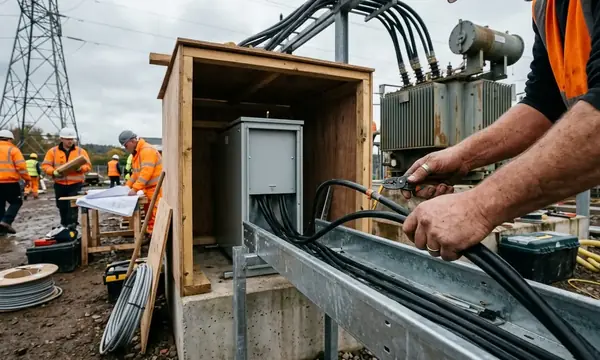
- Transformer installation: bringing together connections, earthing, protection interfaces and the checks required before service.
- Protection testing: proving relay behaviour through secondary injection and checking that the complete scheme operates as intended.
- Commissioning: resolving the interfaces between individual components so that the assembled distribution system can be energised under controlled conditions.
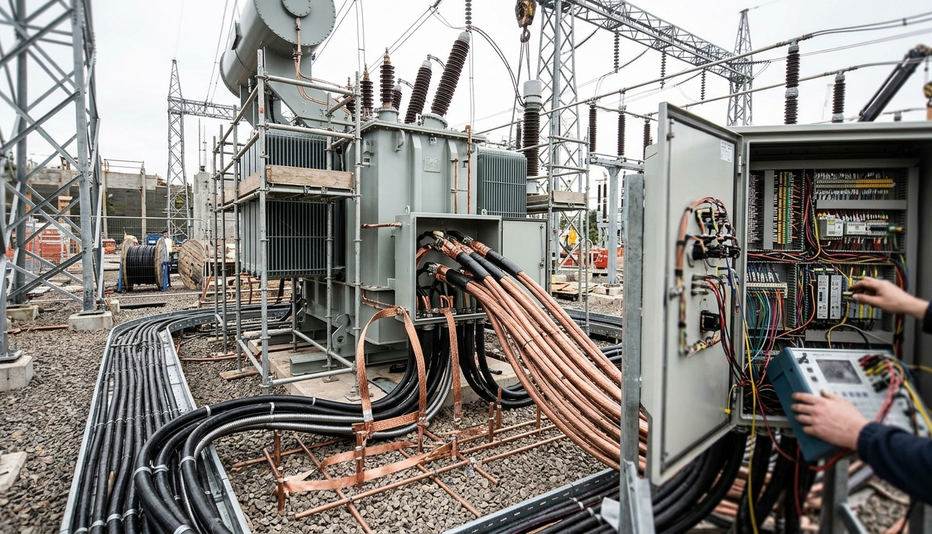
Across this corridor, an upgrade may involve an 11 kV network alongside legacy process equipment operating at another voltage. The drawings and equipment specifications must define the required competence. A broad description such as “HV experience” leaves too much unanswered when selecting a jointing team or assigning switching duties.
Compare that with a standard commercial fit-out. Distribution boards, lighting and sub-mains demand competent installation and verification to BS 7671. Heavy industrial distribution adds another layer of operational control, protection coordination and site-specific authorisation. Hydrocarbon process areas also require hazardous-area installation and inspection competence, including the relevant CompEx assessment.
A commercial installation qualification does not, by itself, establish competence for hazardous-area work or independent HV switching.
Keep Switching Capability After Handover
The construction programme ends; the duty to maintain the installation continues. Facilities need people who can inspect equipment, interpret developing defects, maintain protection systems and respond when a fault interrupts production.
Before accepting handover, establish who will hold the operational drawings, maintain relay settings records and attend a switching requirement. Agree how that person gains site familiarity before the commissioning team leaves. A maintenance contract needs named responsibilities and credible attendance arrangements, with access and authorisation settled in advance.
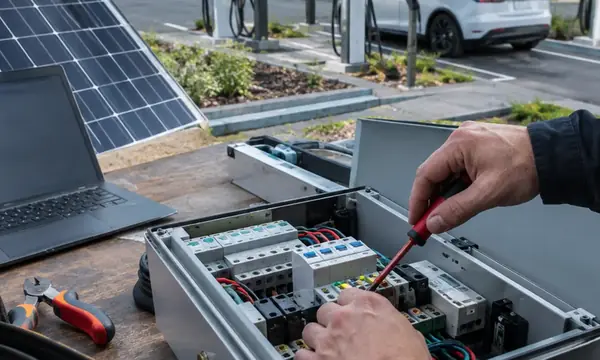
The same discipline applies when commercial infrastructure includes EV charging systems, although their presence does not make a commercial site equivalent to a process plant. Define competence against the actual equipment and duties. For compliance & testing, that distinction keeps contractor selection grounded in the installation rather than the breadth of a company’s service list.
Training Takes Longer Than a Construction Package
An apprenticeship runs through college learning, supervised site work and competence assessment. Procurement can place an order much faster than that pathway can produce an independently capable electrician.
Specialist commissioning takes longer again. Someone who has completed an installation apprenticeship still needs supervised exposure before taking responsibility for a protection scheme or an HV switching instruction. They need to encounter the equipment, understand the site rules and demonstrate sound judgement under assessment.
This creates a programme mismatch. A developer can secure a manufacturing slot for switchgear while the person expected to receive and operate it remains in training. Recruiting apprentices when construction starts helps the longer-term workforce, but the energisation plan also needs experienced people already progressing towards the required duties.
Travelling Crews Leave a Local Capacity Question
Mobile specialist teams have a clear place in major industrial projects. They bring capabilities that individual sites may need only during an installation, outage or commissioning campaign. The difficulty comes when their availability becomes the entire staffing plan.
Those teams compete for work across UK infrastructure projects. Heavy demand can push up labour costs across Central Scotland, while changes to another project’s programme can affect availability. Once a commissioning crew demobilises, its detailed understanding of the installation can leave with it unless the operating team has worked alongside it.
There is also a quieter consequence for commercial landlords and facility managers. Major tier-one packages can draw experienced electricians away from local contractor workloads. The regional workforce has moved between contracts without growing.
A landlord then faces a narrower choice of contractors for an inspection, remedial work or a distribution-board replacement. Planned compliance visits become harder to schedule. A small facilities team must spend more time securing attendance while still managing access, tenants and shutdown windows.
For regional projects, track the effect on both sides of the labour market: the people recruited into major works and the capacity remaining to maintain surrounding premises. A development that needs local contractors throughout its operating life has a direct interest in keeping that supply chain viable.
Put Apprenticeship Funding Into the Grangemouth Deal
I would start negotiations with a simple requirement: show how the electrical posts created by the design will be staffed through construction and into operation. That makes the discussion specific enough to turn into contractual commitments.
Falkirk and neighbouring councils should pursue those commitments through appropriate planning obligations and transition-funding conditions. Developers should underwrite multi-year apprenticeship places before ground is broken, with obligations tied to delivery milestones and continuing into early operation.
Fund Places Against Real Electrical Duties
- Map the future posts. Identify switching, maintenance, protection and inspection duties against the proposed network and operating arrangements.
- Underwrite the training. Set funded apprenticeship commitments alongside supervision, college attendance and the experienced personnel needed for safe delivery.
- Carry the obligation beyond construction. Keep support in place as the installation enters service, when operating knowledge must transfer to the permanent team.
- Review progress at funding milestones. Require evidence of placements, supervised work and qualification progression before releasing the next agreed drawdown.
For already-consented, privately funded works, seek equivalent commitments directly from the owner rather than relying on a new planning or transition-funding condition.
Teach on the Distribution Equipment Being Bought
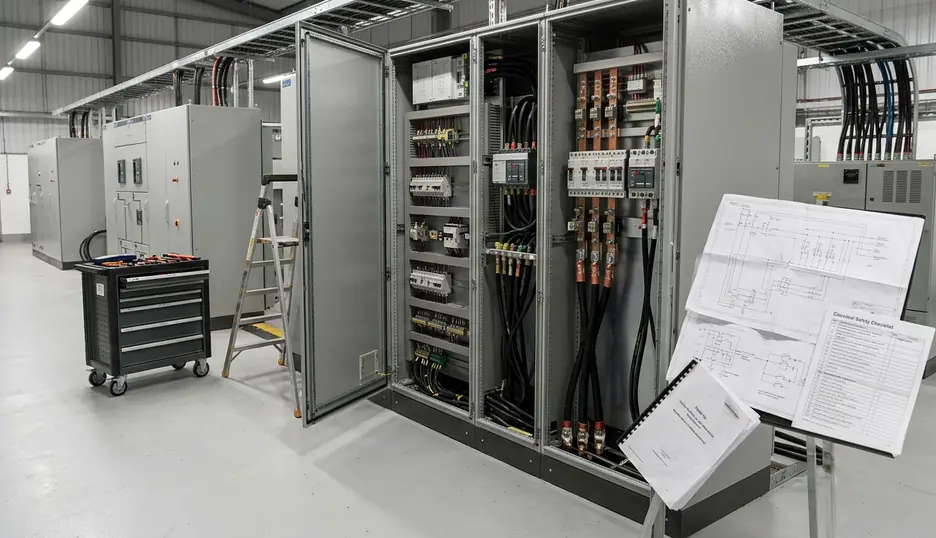
Regional colleges need a working connection to project electrical designs. An installation programme built around ring-main units and protection relays calls for training rigs that represent those arrangements. A domestic consumer-unit bay cannot provide that exposure.
Developers, equipment suppliers and local electrical contractors should agree the relevant topology, relay interfaces and practical exercises with teaching staff while procurement is still live. Budget for instructors alongside equipment. A relay test rig needs someone capable of teaching the reasoning behind the settings and the functional checks.
Let Apprentices Follow the Work
A shared regional workforce charter should protect qualification continuity when individual construction phases finish. Contractors can agree placements across the supply chain, with clear responsibility for supervision, assessment evidence and the apprentice’s next assignment.
Those rotations should fill gaps in experience: containment and cabling on one package, distribution installation on another, then suitable testing and commissioning exposure under supervision. Keep the training record with the learner and arrange the next placement before the current work winds down.
Before the next Grangemouth ground-break, will the developer and council fund the people who can authorise energisation, or accept completed switchgear waiting for someone qualified to close the breaker?